











Deepeeka
We carry many fine Deepeeka products to decorate your home or add authenticity to your Renaissance fair experience. We carry a variety of collectible swords, historical armour, medieval clothing, decorative shields, and more. You can create a truly impressive historical campsite with our Roman and medieval camp tools, which include everything from historical cookware to fire starters to period tents. In addition to excellent display weaponry, Deepeeka produces many fine medieval daggers and historical accessories like powder horns and leather belts. When you want to create an incomparable reenactment experience or to decorate your home or office with excellent historical touches, take a moment to browse the Deepeeka section.
Sort by
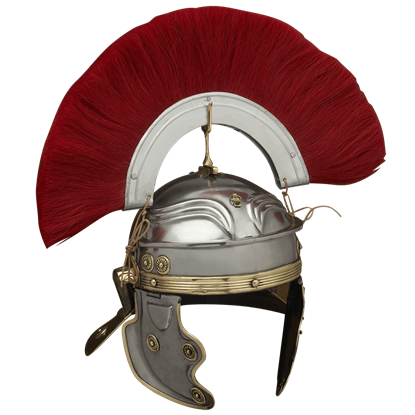
Gallic H Centurion Helmet
Item # AH-6069
The imperial helmet is a classification applied to the helmet that was considered by many to be the quintessential Roman galea. The imperial Gallic H Centurion Helmet is a replica of a historical helm found on an archaeological dig.
$243.13
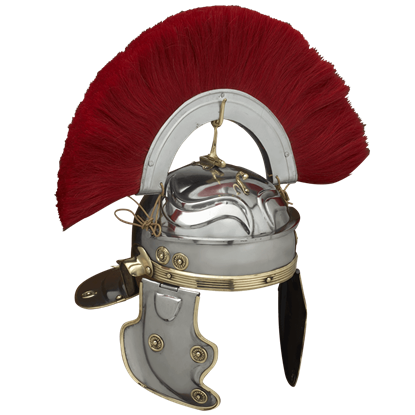
Imperial Gallic Centurion Helm
Item # AH-6070
The Romans were quick to adopt anything that they felt was beneficial to their cause. This Imperial Gallic Centurion Helm is an example of that, as this helmet was based on a design that originally came from skilled Celtic craftsmen.
$243.13
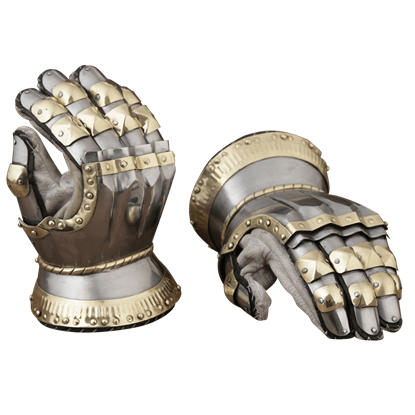
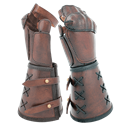
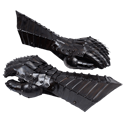
Churberg Hourglass Gauntlets
Item # AH-6086G
It should come as no surprise that, in a medieval bout, people will be watching your hands. After all, your hands are wielding your weapon. These Churberg Hourglass Gauntlets are an effective defender that adds detail to your hands.
$243.13
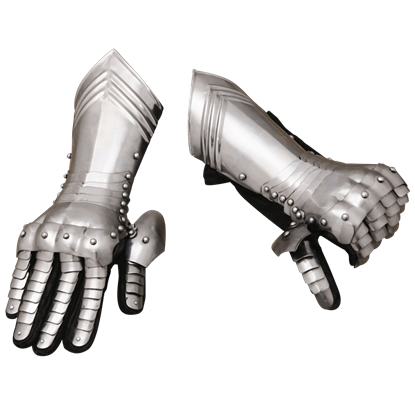
Steel Gauntlets
Item # AH-6020
Virtually every piece of armor had some importance to a warrior, although the gauntlets had a special significance. After all, Steel Gauntlets are ideally suited for protecting the hands without limiting their range of movement.
$234.31
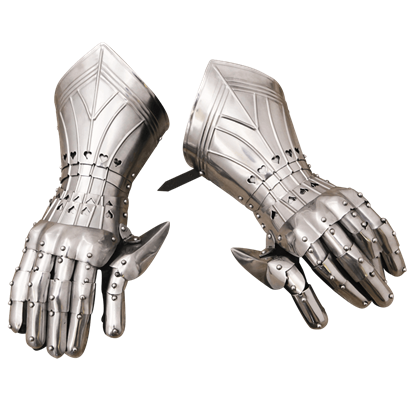
Gothic Gauntlets
Item # AH-6023
These Gothic Gauntlets are a product of German design, possessing a style that pairs them nicely with the gothic armor that the Holy Roman Empire was known for. Not only are they impressive to see, but they are also functional.
$234.31
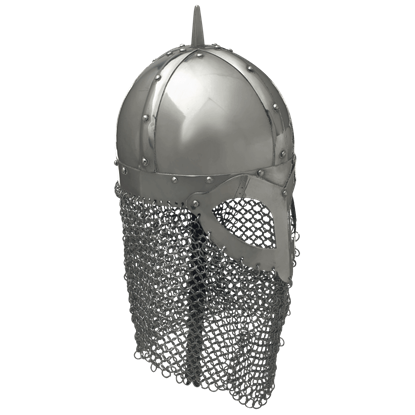
Gjermundbu Helmet
Item # AH-6739
This impressive helmet is modeled after an artifact that was attributed to actual Viking use. Found in Gjermundbu, Norway, the design is recreated and slightly modified to create this wicked looking, Viking Gjermundbu Helmet.
$233.05
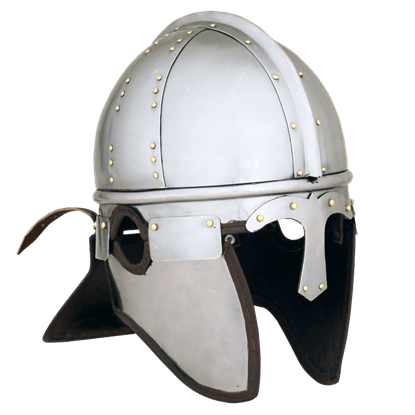
Late Roman Infantry Inlercisa II Helmet
Item # AH-6714N
This Late Roman Infantry Inlercisa II Helmet is an updated form of what became the typical Roman soldiers helmet. The difference between the two is that this helmet protects a larger area, thanks to its nose guard and larger flaps.
$223.00
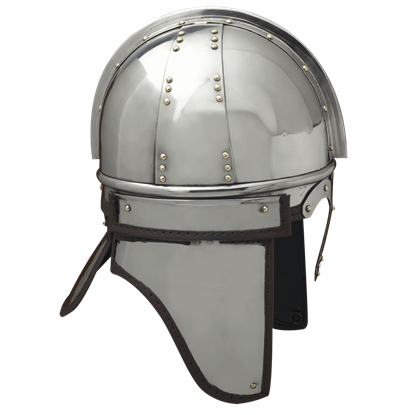
Roman Cavalry Helmet
Item # AH-6715N
Later Roman helms gradually moved towards simplicity and effectiveness, rather than impressive displays. Take this Roman Cavalry Helmet, for instance, which features very little in the way of ornamentation and focuses on pure defense.
$223.00
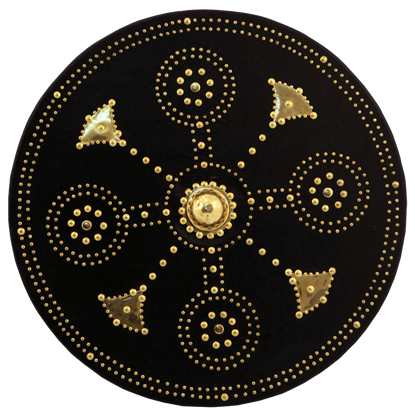
Brass Studded Scottish Targe
Item # AH-3999
The preferred shield of the Highland warrior was the targe. Slightly smaller than the medieval round shield, this Brass Studded Scottish Targe is a reproduction of the Scottish shield, in all its impressive detail and adorned glory.
$220.45
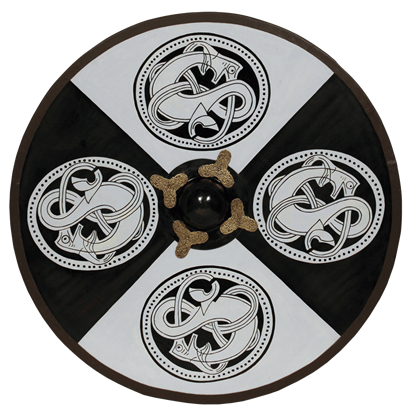
Round Dragon Knot Viking Shield
Item # AH-4374
Many Norse warriors attempted to emulate the qualities of ferocious beasts, either by berserking or by adopting their images. This Round Dragon Knot Viking Shield is one such attempt to harness the power of the legendary dragon.
$214.15
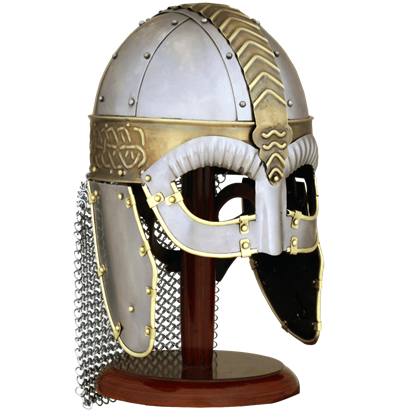
Viking Wolf Helmet
Item # AH-6770
Vikings and other Norse warriors were well-known for their attempt to emulate the fury and prowess of animals, and this Viking Wolf Helmet is likely an attempt to channel the power of the wild wolf, creating a warrior blessed by Odin.
$207.85
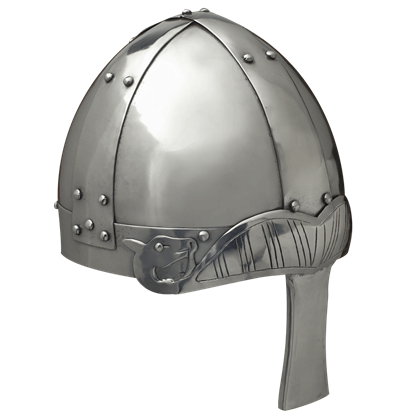
Nasal Helmet
Item # AH-6740
There is a reason why this Norman helmet saw wide-spread use over the course of history. The Nasal Helmet might look simple, but it is that simplicity that makes this helmet so effective, as it offers great protection at little cost.
$205.33
Shipping Via

