










Deepeeka
We carry many fine Deepeeka products to decorate your home or add authenticity to your Renaissance fair experience. We carry a variety of collectible swords, historical armour, medieval clothing, decorative shields, and more. You can create a truly impressive historical campsite with our Roman and medieval camp tools, which include everything from historical cookware to fire starters to period tents. In addition to excellent display weaponry, Deepeeka produces many fine medieval daggers and historical accessories like powder horns and leather belts. When you want to create an incomparable reenactment experience or to decorate your home or office with excellent historical touches, take a moment to browse the Deepeeka section.
Sort by
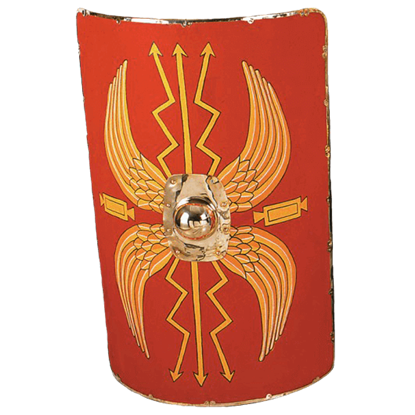
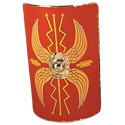
Wooden Roman Shield
Item # AH-3853W
Every soldier in the Roman army was expected to carry a shield. Like the Spartans before, the Romans tactics utilized shield-walls, creating almost impenetrable barriers made up of these impressive and iconic Wooden Roman Shields.
$175.09
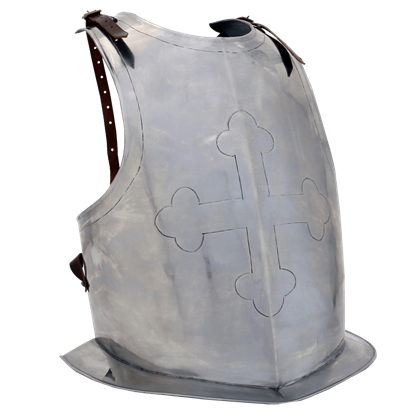
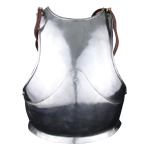
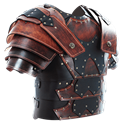
Medieval Templar Breastplate
Item # AH-4373
Any warrior knows that the quickest way to ones heart is directly through the ribs, and that is what makes a breastplate so important! This Medieval Templar Breastplate offers a good defense and also some unique style for your look, too.
$171.31
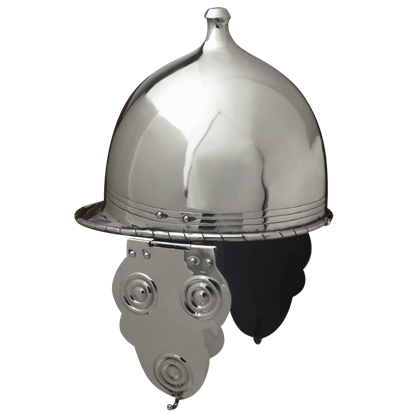
Montefortino Celtic Helmet
Item # AH-6318N
The Montefortino Celtic Helmet is designed off a helmet that was found in a Celtic burial site in Montefortino, Italy. The helm has a simple yet effective design that was favored by Celts, and later, the Romans.
$171.31
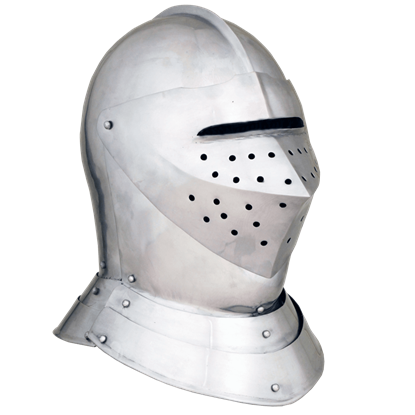
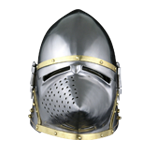
English Knights Jousting Close Helm
Item # AH-6792
This English Knights Jousting Close Helm is based on the style of helmet that became popular during the end of the medieval era, as well as during the early renaissance era, thanks to the amount of protection that the helmet provided.
$171.31
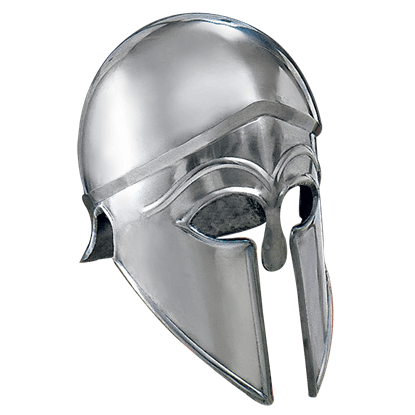
Italo Iron Corinthian Helmet
Item # AH-6058I
With its distinctive shape, the Italo Iron Corinthian Helmet is one of the most identifiable helmets of history. The iconic helm of the Spartan warrior, this helmet was favored by many Greeks because of its protective design.
$161.23
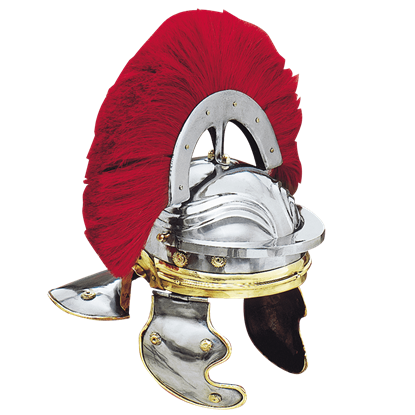
Imperial Italic Centurion Helm with Red Plume
Item # AH-3815
How could you tell the difference between common Roman soldiers and their officers? Centurions often wore helmets that indicated their rank utilizing a crest, just as the Imperial Italic Centurion Helm with Red Plume shows.
$161.23
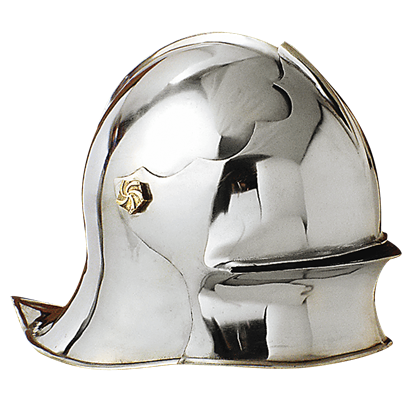
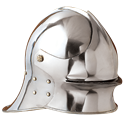
North Italian Sallet Helmet
Item # AH-3822C
The sallet was a common enough helmet after their rise during the 15th century, and for good reason. Helms like this Northern Italian Sallet Helmet were rather protective, while also lacking the drawbacks of many earlier great helmets.
$161.23
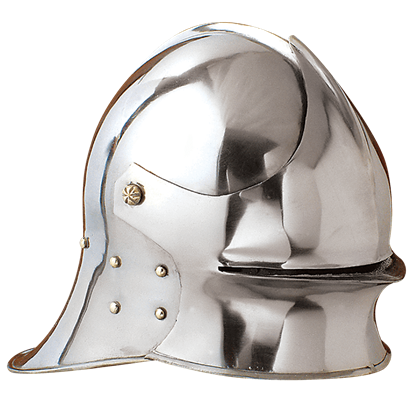
Deep Visored Sallet Helmet
Item # AH-3822D
The sallet was a common enough after their rise during the middle of the 15th century, and for good reason. Helms like this Deep Visored Sallet Helmet were rather protective and lacked the drawbacks of many earlier great helmets.
$161.23
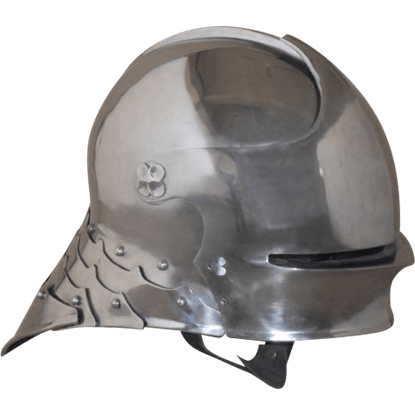
Steel German Sallet
Item # AH-4133
When it comes to the sallet helmet, some of the best came out of Germany. There, the sallet became an almost universal helm, one that was worn by most. This Steel German Sallet reflects the style of one such historic piece.
$156.19
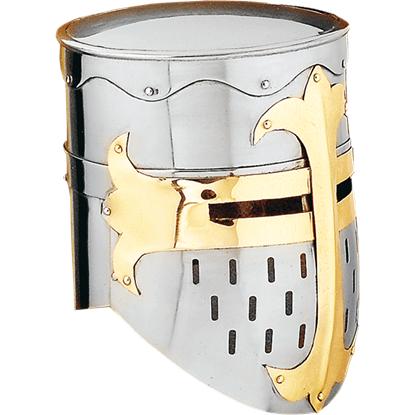
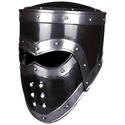
Knights Helmet
Item # AH-3831N
The great helm was great for a number of reasons, but none as important as the level of protection it provided to the wearer. This Knights Helmet is a classic example of a medieval great helm that kept its wearer safe behind steel.
$151.15
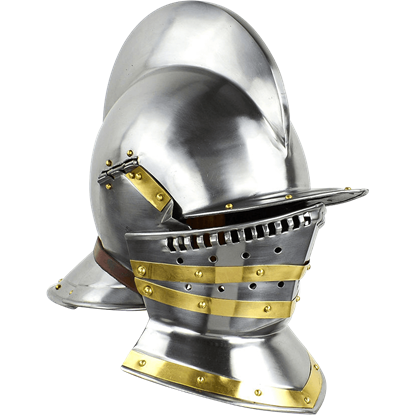
Burgonet Helmet
Item # AH-3819
The Burgonet Helmet was, in many ways, the successor to the medieval sallet. Used primarily in the late renaissance, this helmet offered similar protection to the sallet but was considered to be lighter and easier to wear.
$148.63
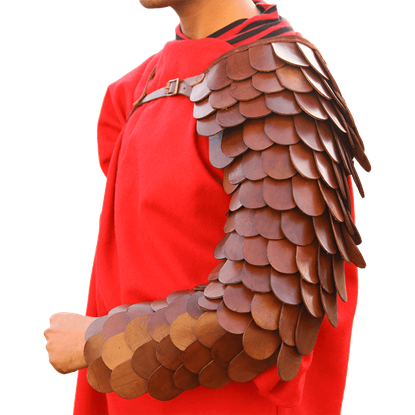
Gladiator Scaled Leather Arm Guard
Item # AH-6234L
The armor a gladiator wore often depended on their type, although a more common piece of gladiatorial armor was this Gladiator Scaled Leather Arm Guard. This protector offers a modicum of defense, while also being quite lightweight.
$148.63
Shipping Via

