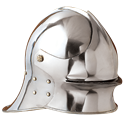
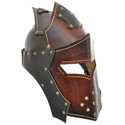
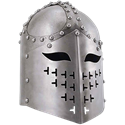
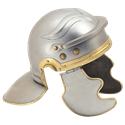
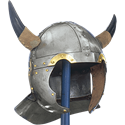
The Middle Ages covered a sizeable span of time, and that was time enough for the helmet to undergo many radical changes. And that's why the Medieval Helmets section of Medieval Armour is so full of different styles, because between classic medieval helmets and newer renaissance helmets, there were a lot of helms for a warrior to choose from. There is no one true medieval helmet, simply because, as stated above, the helmet underwent a lot of changes during medieval times, as warriors were constantly adapting their armour to suit the most pressing needs possible. This is why our medieval helms are so varied. If you're looking for a functional helmet, though, you've come to the right place, as you'll find functional varieties of all manner of historic helmets. Knights, crusaders, and Templars will find that the bascinet helmet, the great helmet, the sugar loaf helmet, and the sallet helmet are all typical of what many defined as a knight helmet or a crusader helmet. The regular soldier, on the other hand, will feel right at home wearing the kettle hat, the spangenhelm, or the barbute helmet, which are simpler, but no less protective. Virtually every helmet you'll find here is a steel helmet that's designed to take some level of punishment, although some are meant more for the rigors of combat while others are made first and foremost for their looks. You'll also find a number of great SCA helmets here, which are designed to take good knocks and provide more than adequate protection when facing a weighted and blunted training sword. Although there typically isn't any one perfect helmet for any particular style of warrior, you are almost certain to find one or more perfect medieval helmets for you to wear whenever you browse through Medieval Armour's section of Medieval Helms and Helmets.
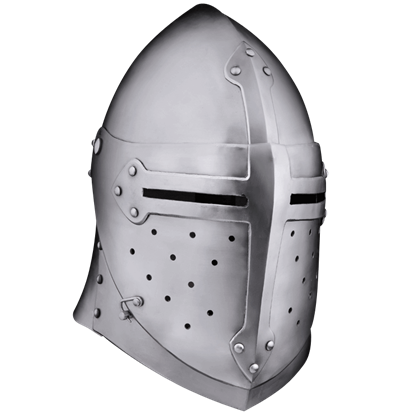
A variant of the medieval great helm, the sugar loaf helm possesses a more conical top than the original helmet design. The 14th Century Sugar Loaf Visored Helmet displays a subtle cross shape over the front of the face.
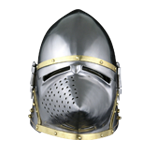
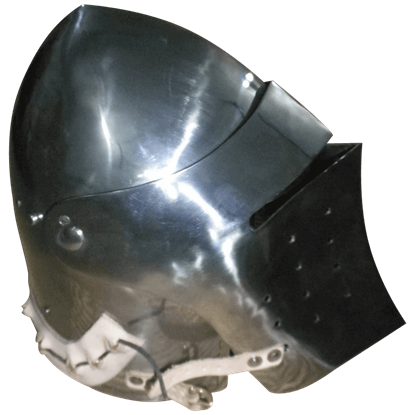
The Medieval Battle Bascinet offers its wearer a historic take on head protection. This 12 gauge steel helmet features a slightly pointed, sugar loaf shape and a hinged visor, a common style of head protection for knights of old.
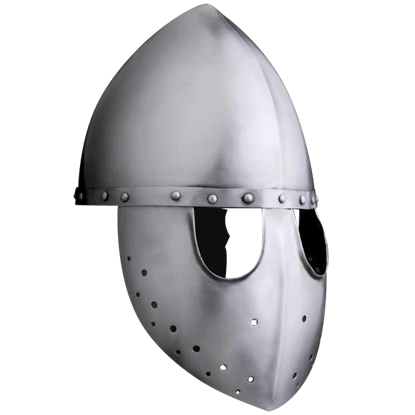
With its large eye holes, the Sanguessa Cabasset with Face Guard is a helmet that allows increased visibility. The cap of the helmet features the distinct rounded shape from which it takes its name, reminiscent of the top of a pear.
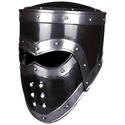
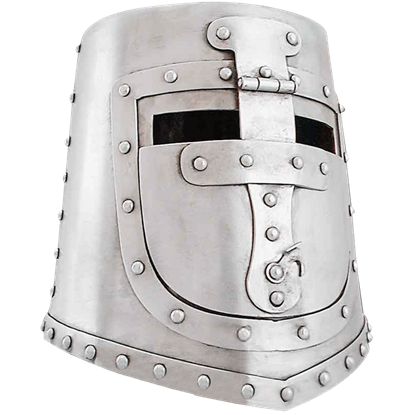
Styled after an original helm of the Knights Templar, the Holy Order who fought in the Crusades. Great for SCA combat, this helm is not a lightweight. Each is handmade from 14 gauge steel. With padding, it is perfect for battle.
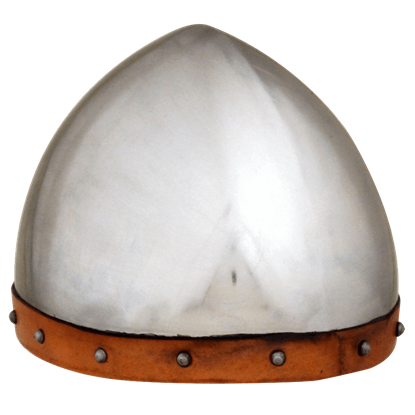
Appearances can be deceiving. As basic as this Economy Domed Helmet might seem as a skullcap, it was actually a design that was favored by countless warriors, from the crusaders in the Holy Wars to archers and foot soldiers.
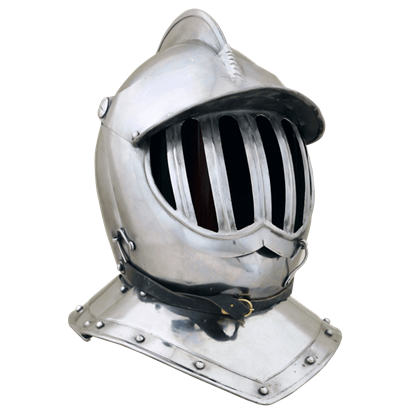
When wearing a helmet, protection is good, but comfort must also be a consideration. After all, a protective helm that is impossible to wear, is not worth much. This 17th Century Closed Burgonet blends protection and comfort perfectly.
England has known its fair share of conflict, sometimes over land, religion, and of course, the throne. This War of the Roses Archer Helm is based off an artifact from a period when two rival houses fought over the throne of England.
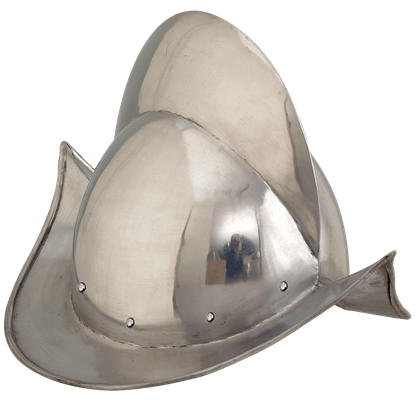
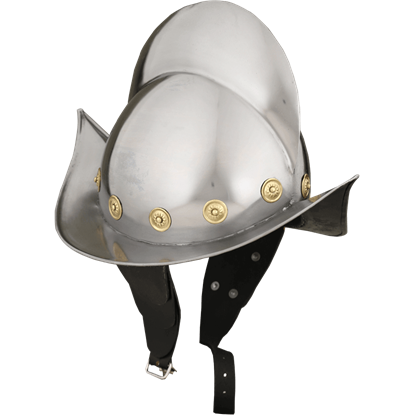
The morion is most commonly associated with the Spanish, although historically, many other cultures also used it. This Economy Morion Helmet reflects the general look of the comb morion, while also possessing its protective design.
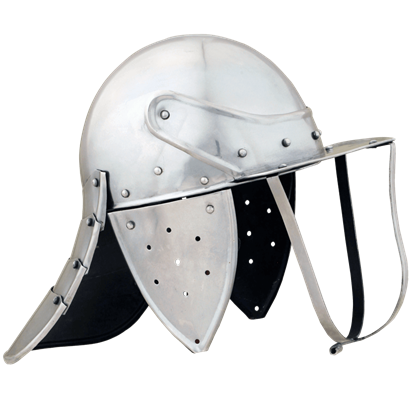
The Lobster-Tailed Pot Helmet was one of the few European helmets that had a distinctively Oriental origin, being derived from an Ottoman Turkish helm of similar design. It was adopted by much of Europe throughout the 17th century.
While it is most famously associated with the Spanish conquistadores, the truth is that the Classic Spanish Morion Helm, and others like it, was actually a wide-spread piece that was favored by warriors all over Europe.
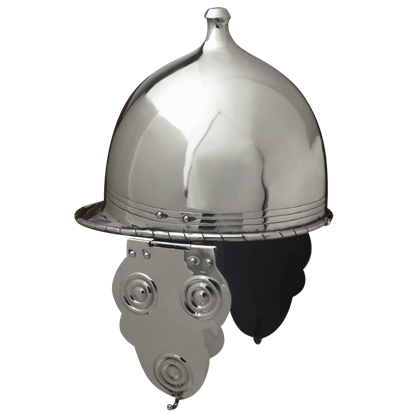
The Montefortino Celtic Helmet is designed off a helmet that was found in a Celtic burial site in Montefortino, Italy. The helm has a simple yet effective design that was favored by Celts, and later, the Romans.
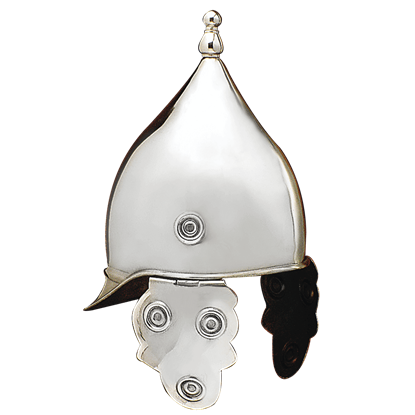
The Celts were a diverse group of tribes that once occupied much of iron-age Europe. This Celtic Spire Helmet is named for the distinctive design that was used in many historical Celtic helms, featuring a tall cap with a rounded point.